Categories
Parenting Tips & Daily Routines

How to Reduce Separation Anxiety in Preschool Children: A Guide for Parents
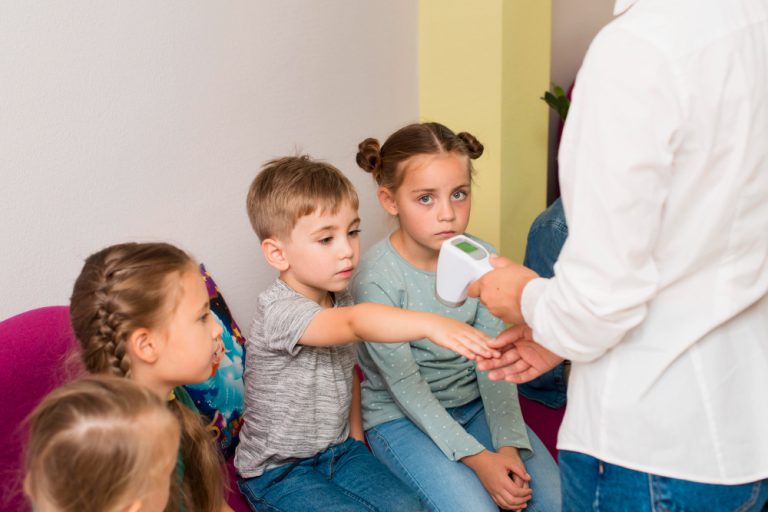
Your child clings to your leg at drop-off, sobbing. You feel a mix of guilt, helplessness, and the pressing need to get to work. It’s one of the most emotionally difficult parts of the preschool experience — for children and parents alike.

Here’s what every parent needs to know: separation anxiety in preschool is developmentally normal, especially for children aged 2–4. It doesn’t mean your child is damaged, that you’ve done something wrong, or that preschool is the wrong choice. It means your child loves you and has a healthy, secure attachment. The goal isn’t to eliminate that — it’s to help your child develop the confidence and coping skills to manage separations successfully.

Understanding Separation Anxiety in Young Children

Separation anxiety typically peaks between 10 and 18 months, then resurfaces during major transitions — like starting preschool. Children at ages 2–4 are cognitively aware enough to know that you’re leaving, but not yet mature enough to fully trust that you’ll return. Their distress is genuine, not manipulative.

The prefrontal cortex — the part of the brain responsible for emotional regulation and understanding time — doesn’t mature until the mid-20s. When your 3-year-old cries because you’re leaving, they genuinely cannot yet process ‘Mommy will be back in 3 hours’ the way an older child can.

This is also why the social-emotional environment at preschool matters so much. See our post on how preschool builds social and emotional skills in children.

What Separation Anxiety Looks Like at Drop-Off

  • Crying, screaming, or clinging at the classroom door
  • Complaints of stomach aches or headaches before school
  • Sleep difficulties the night before school
  • Increased clinginess at home in the evenings
  • Asking repeatedly when you’ll be back

In most cases, children recover within 5–15 minutes of drop-off. If your child’s teacher reports that your child is happy, engaged, and playing within 15–20 minutes of you leaving, the separation anxiety is being managed successfully — even if drop-off itself is still difficult.

Strategies That Actually Work

1. Create a Consistent Goodbye Ritual

A predictable goodbye routine — a specific sequence of hugs, a special wave, a consistent phrase like ‘I’ll see you after snack time’ — gives your child something concrete to hold onto. It becomes a bridge between you and the school day. Do the same goodbye every single time, confidently and warmly.

2. Never Sneak Out

It’s tempting to slip away when your child is distracted. Don’t. Children who experience this lose trust in the predictability of goodbye — and often become more anxious over time because they don’t know when you might disappear. Always say a real goodbye, even if it’s hard.

3. Keep Your Own Emotions in Check at Drop-Off

Children are exquisitely attuned to parental anxiety. If you appear worried or guilty at drop-off, your child reads that as confirmation that the situation is genuinely threatening. Take a breath, put on a confident, warm expression, and communicate through your body language that this is safe and normal.

4. Use a Transitional Object

A small photo of the family, a special stone, or a little token from home in your child’s backpack or pocket can provide comfort throughout the day. It connects your child to you without requiring your presence.

5. Practice Short Separations Before Preschool Starts

If your child hasn’t had many separations, start practicing before the first day of school. Leave them with a trusted adult for 30 minutes, then an hour, then a few hours. This builds confidence that separations are temporary. Combine this with a consistent morning routine for preschoolers to reduce overall morning anxiety.

6. Acknowledge the Feeling Without Amplifying It

Validate your child’s emotion without catastrophizing it. ‘I know you feel sad when I leave. That makes sense. And you’re also going to have a great day and I will be back.’ Do not say ‘Don’t cry’ — that dismisses the emotion. Do not say ‘I’m going to miss you so much too’ — that amplifies separation anxiety. Acknowledge, normalize, and redirect.

When Does It Become a Concern?

Most separation anxiety in preschool resolves within 4–6 weeks. If your child is still significantly distressed at drop-off after 8 weeks, is unable to engage with peers or teachers throughout the school day, or shows physical symptoms (consistent vomiting, extreme behavioral changes), speak with your child’s teacher and consider consulting a pediatric psychologist.

Choosing a school with warm, experienced staff who handle transitions well is one of the most important factors. See our guide on what to look for in a preschool in Deerfield Beach.

Ready to Give Your Child the Best Start?

At LSA Preschool in Deerfield Beach, FL, we are dedicated to nurturing every child’s growth through a loving, stimulating environment. Whether you’re exploring enrollment options or ready to visit our campus, we’d love to meet your family.

Schedule a Tour at LSA Preschool — Let’s find the perfect program for your child.

Explore all our preschool programs and services to find the right fit.

Categories
Parenting Tips & Daily Routines

How to Prepare Your Child for Their First Day of Preschool: A Parent’s Complete Guide

The first day of preschool is a milestone — for your child and for you. For some children, it’s an exciting adventure. For others, it’s terrifying. For most parents, it’s a mix of pride, anxiety, and the quiet hope that it goes smoothly. After welcoming hundreds of new families at LSA Preschool in Deerfield Beach, our educators have learned what genuinely helps children and parents transition successfully into the preschool environment.

Here is our complete guide to preparing for day one.

Start Talking About Preschool Weeks Before It Starts

Don’t introduce preschool the morning of the first day. Begin talking about it 2–4 weeks in advance — casually, positively, and without pressure. Use books about starting school (there are many wonderful picture books on this theme). Drive past the school and point it out. Say things like: ‘That’s your school — you’ll get to paint and play and make new friends there.’

The goal is to build familiarity and positive association before the first day arrives, so it doesn’t feel like an unknown.

Understanding what preschool actually involves — what children learn, who they’ll meet, what the day looks like — reduces anxiety for both parents and children. Our post on what a 3-year-old should learn before kindergarten is a helpful read to prepare yourself.

Visit the School Before Day One

Most preschools, including LSA Preschool, offer orientation visits or open houses before the school year begins. Take advantage of this. Walk your child through the classroom, show them the bathroom, let them meet the teacher, and let them touch and explore the materials. Familiarity with the physical environment dramatically reduces first-day anxiety.

Practice the Morning Routine Before School Starts

Start practicing your school-day morning routine at least one week before the first day. Wake up at school time, do the bathroom routine, get dressed, have breakfast, and pack the bag — even if you’re just going to the park. This primes your child’s internal clock and reduces the novelty of the morning routine itself. See our detailed guide: morning routine for preschoolers that actually works.

Use a ‘Transitional Object’ Strategy

A transitional object is something your child can bring from home that provides comfort — a small family photo tucked in their backpack, a special keychain on the zipper, or a tiny stuffed animal in their cubby. At LSA Preschool, we encourage transitional objects for new students as they adjust. The object connects your child to home and to you while they build confidence in the new environment.

Build a Goodbye Ritual — and Stick to It

One of the most important things you can do on the first day — and every day — is establish a consistent goodbye ritual. It can be a hug, a special handshake, three kisses, or any sequence that feels right for your family. What matters is that it’s the same every time.

When you say goodbye, do it confidently and warmly — then leave. Do not linger, sneak out, or make repeated returns to check. Children read their parent’s emotional state. If you communicate confidence, your child will begin to believe the situation is safe. If you hover or appear anxious, it amplifies your child’s uncertainty.

If separation is particularly difficult, read our dedicated guide on how to reduce separation anxiety in preschool children.

What to Pack for Day One

  • Labeled backpack with your child’s name
  • Change of clothes (accidents happen — this is normal)
  • Completed enrollment paperwork if not already submitted
  • Labeled water bottle
  • Snack or lunch in labeled containers
  • Any required comfort or nap items (blanket, stuffed animal)
  • Emergency contact information updated with the school

Prepare Yourself Emotionally

Your child’s first day is also a milestone for you. Many parents feel an unexpected wave of emotion — grief, pride, relief, guilt. All of it is normal. Give yourself permission to feel it, and then remind yourself: choosing a quality preschool is one of the most loving things you can do for your child’s development.

To understand why that investment matters so much, revisit our post on the best age to start preschool in Deerfield Beach.

What to Expect After the First Week

Most children take 2–4 weeks to fully adjust to preschool. Some adjust in a few days; some take 6–8 weeks. Both are normal. Signs of healthy adjustment: talking about school positively at home, mentioning friends or teachers by name, and arriving with less resistance over time. If your child is still highly distressed after 6–8 weeks, speak with the teacher and, if needed, a child development professional.

Ready to Give Your Child the Best Start?

At LSA Preschool in Deerfield Beach, FL, we are dedicated to nurturing every child’s growth through a loving, stimulating environment. Whether you’re exploring enrollment options or ready to visit our campus, we’d love to meet your family.

Schedule a Tour at LSA Preschool — Let’s find the perfect program for your child.

Explore all our preschool programs and services to find the right fit.

Categories
Parenting Tips & Daily Routines

Morning Routine for Preschool Kids That Actually Works

If mornings in your house feel like a combination of negotiations, lost shoes, and last-minute meltdowns, you’re in good company. Getting a 2, 3, or 4-year-old ready for preschool is genuinely challenging — not because your child is difficult, but because young children thrive on predictability and struggle with rushed transitions.

The good news: a consistent, well-designed morning routine can transform your mornings from chaotic to calm. Here’s a practical framework that works for preschool-age children, based on what we see in successful routines among our LSA Preschool families in Deerfield Beach.

Why Routine Matters So Much for Preschoolers

Young children’s brains are still developing the capacity to regulate emotions and transitions. When mornings are unpredictable, children can’t mentally prepare for what comes next — and that uncertainty creates anxiety and resistance. A consistent routine becomes a predictable sequence the child’s brain can anticipate and feel safe within.

This same principle applies to how we structure the day at LSA Preschool. Predictability in the school day directly supports the social and emotional development of children ages 2 to 5.

How Much Time Do You Actually Need?

Most families underestimate how long a preschool morning takes. A realistic morning for a child aged 2–5 needs 60 to 90 minutes from wake-up to drop-off. If you’re currently trying to do it in 30–45 minutes, that gap explains a lot of the morning stress. Set your alarm accordingly.

The LSA Preschool Morning Routine Framework

Step 1: Wake Up — Build In Buffer Time (60–90 Min Before Drop-Off)

Wake your child at the same time every school day — including days you might normally let them sleep in. Consistency is more important than an extra 20 minutes of sleep on a Tuesday. Children’s internal clocks adapt to regular wake times within 1–2 weeks.

Step 2: Bathroom First (10–15 Min)

Toilet, hand washing, face washing, teeth brushing — in that order, every morning. Post a simple visual chart in the bathroom showing each step with pictures (not words). Children as young as 2.5 can follow a 4-step visual routine independently when it’s consistent.

Step 3: Get Dressed Before Breakfast (10–15 Min)

Counterintuitive, but effective. If you dress your child before breakfast, you eliminate the post-breakfast spill re-dressing scramble. Lay out clothes the night before and give your child 2 acceptable choices (‘Do you want the blue shirt or the red shirt?’). Controlled choices reduce power struggles dramatically.

Step 4: Breakfast — Calm and Seated (15–20 Min)

Serve breakfast at the table with no screens. Keep it simple and nutritious. See our guide on healthy lunch ideas for preschoolers — many of those same principles apply to breakfast: easy to eat, nutrient-dense, and low-mess. Good morning options: banana and whole grain toast with nut butter, scrambled eggs and fruit, yogurt with berries.

Step 5: Pack the Bag Together (5 Min)

Make bag-packing part of your child’s routine, not something you do for them. A 3-year-old can put their water bottle, snack, and show-and-tell item into their own backpack with guidance. This builds independence and gives the child a sense of participation and ownership.

Step 6: Shoes and Out the Door (5–10 Min)

Keep shoes in one consistent location — always. Shoe chaos is the #1 cause of last-minute delays. A small basket by the front door that your child puts shoes in every single time eliminates the morning shoe hunt entirely within a week.

How to Handle Morning Resistance

  • Give a 5-minute warning before each transition (‘In 5 minutes we’re going to put on shoes’)
  • Use a visual timer so your child can see time passing
  • Keep your own energy calm — children mirror parental stress
  • Never use preschool as a threat or punishment (‘If you don’t hurry, you can’t go to school’)
  • Create a morning playlist — songs your child loves that span the morning routine

If resistance is severe and consistent, it may be related to anxiety about school itself rather than the morning routine. See our guide on

how to handle preschool separation anxiety for strategies specific to that issue.

Preparing the Night Before

  • Lay out tomorrow’s clothes (let your child choose between 2 options)
  • Pack the backpack completely — no last-minute searches
  • Prep breakfast items as much as possible
  • Confirm the next day’s schedule with your child before bed

The morning routine starts the night before. Families who do this consistently report dramatically less morning stress within 2–3 weeks.

Ready to Give Your Child the Best Start?

At LSA Preschool in Deerfield Beach, FL, we are dedicated to nurturing every child’s growth through a loving, stimulating environment. Whether you’re exploring enrollment options or ready to visit our campus, we’d love to meet your family.

Schedule a Tour at LSA Preschool — Let’s find the perfect program for your child.

Explore all our preschool programs and services to find the right fit.